What Questions Should a Website Chatbot Ask to Qualify Leads?
Discover the most important questions your AI website chatbot must ask to qualify local business leads without scaring potential customers away.
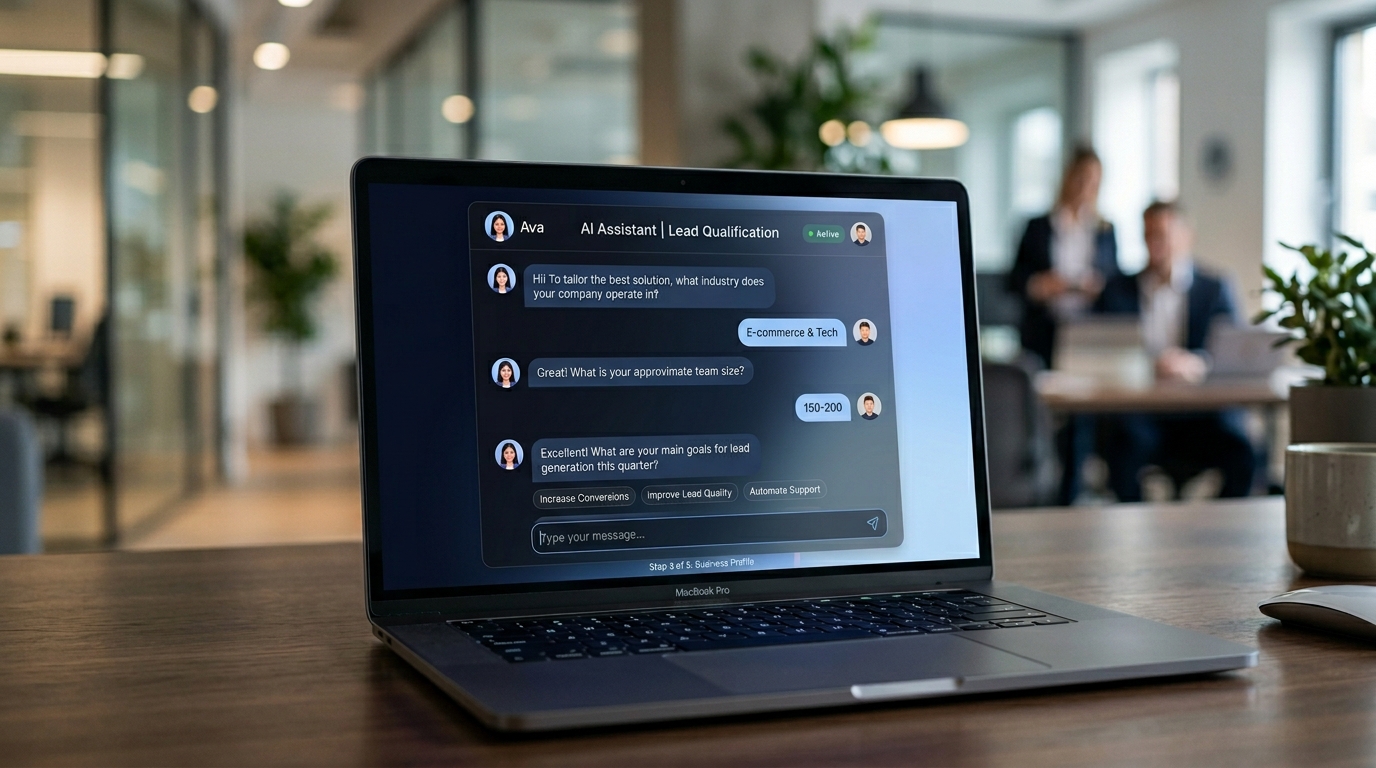
Installing an AI chatbot on your local business website is a powerful way to increase conversions. But simply having a chat widget is not enough. The success of your conversational marketing relies entirely on what the chatbot actually says.
If your AI assistant asks too few questions, you end up with low-quality, useless leads. If it asks too many questions, it feels like an interrogation, and the visitor will simply close the window and leave.
A similar guide from this project is Website Chatbots & Lead Gen.
Finding the perfect balance is called “conversation design.” In this guide, we will break down exactly what questions your website chatbot should ask to qualify leads effectively, keep visitors engaged, and provide your team with the context they need to close the sale.

The Golden Rule: Value Before Extraction
Before we dive into the specific questions, it is crucial to understand the psychology of a website visitor. When someone lands on your site, they are looking for a solution to their problem. They are not there to do you a favor by giving you their data.
The Golden Rule of Chatbots: You must provide value before you extract information.
If your chatbot immediately opens with: “Hi! What is your name, phone number, and email?” — the visitor will bounce. It feels aggressive and transactional.
Another useful resource is Top 5 Chatbot Mistakes.
Instead, the AI should open by offering assistance: “Hi there! I can help answer questions about our services, pricing, or availability. What are you looking for today?”
Once the AI answers the visitor’s initial question, it has earned the right to ask for their contact details in return.
The Core 4: Essential Questions Every Chatbot Must Ask
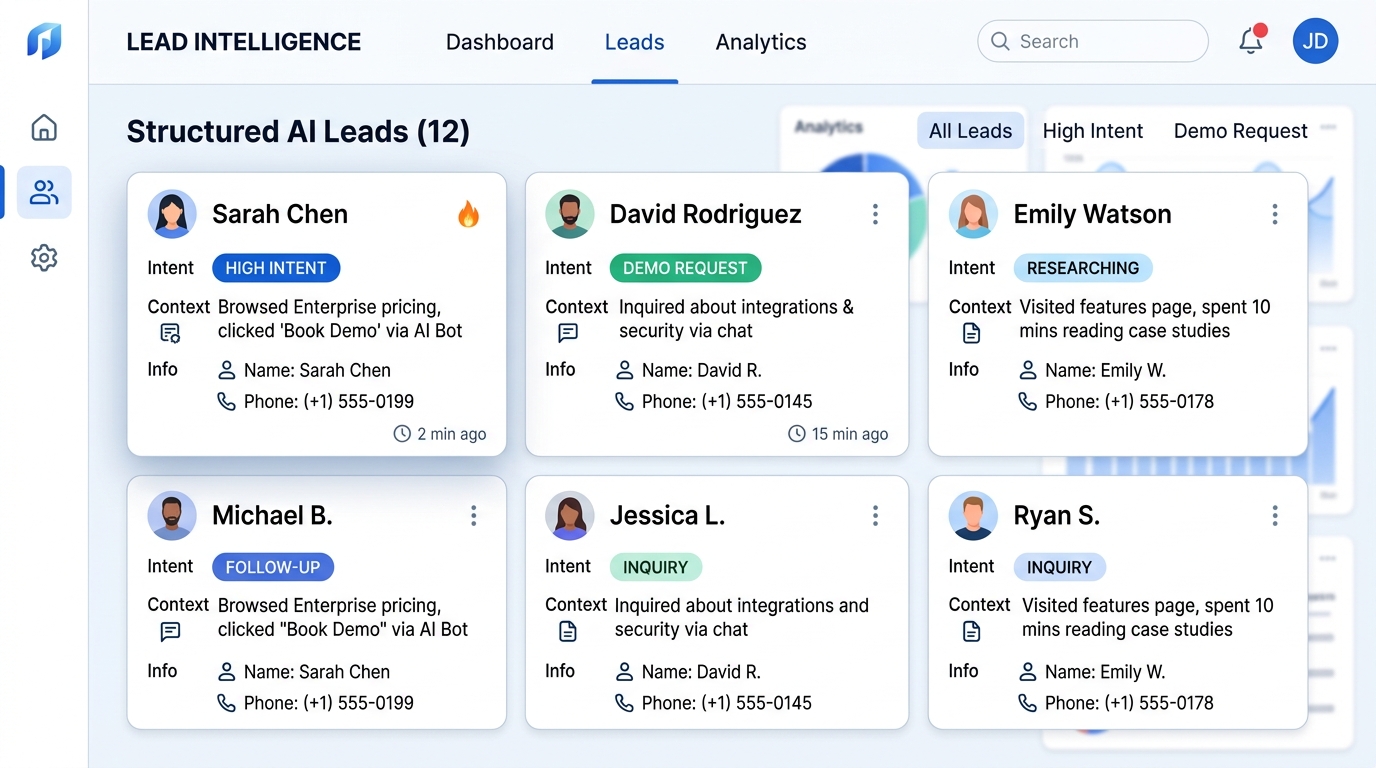
Regardless of your industry, every lead qualification flow needs to cover four basic bases. These questions form the foundation of a structured lead.
1. The Intent Question
You first need to understand why the person is on your website. What is their primary goal?
- How to ask it: “What specific service are you interested in today?” or “How can our team help you?”
- Why it matters: This routes the conversation. It tells the business owner exactly what the customer wants to buy, allowing for a highly targeted follow-up call.
2. The Context Question
Once you know what they want, you need a brief understanding of their current situation.
- How to ask it: “Could you share a little bit more detail about your project/issue?” or “Is there a specific date or deadline you are aiming for?”
- Why it matters: This separates serious buyers from casual browsers. A lead who provides a detailed paragraph about their broken air conditioner is much hotter than a lead who just says “Need AC fixed.”
3. The Identification Question
You need to know who you are talking to, but you should keep it casual.
- How to ask it: “I can have our manager reach out to discuss this. Who should they ask for?” or simply, “What is your name?”
- Why it matters: Personalization. When you call the lead back, starting with “Hi Sarah,” immediately builds rapport.
4. The Contact Question
This is the most critical question in the entire flow. Without it, you have no lead.
- How to ask it: “What is the best phone number for our team to reach you at?”
- Why it matters: It secures the communication channel. Notice that asking for a phone number is often better than asking for an email in local business, as phone calls convert at a much higher rate.
Industry-Specific Qualification Questions
While the Core 4 questions apply to everyone, local businesses need to tailor their chatbots to their specific niche. Generic chatbots generate generic leads. Custom chatbots generate highly qualified prospects.
Here is how you should adapt chatbot questions based on your industry:
For Service and Repair Businesses
If you fix things (cars, plumbing, HVAC, roofs), urgency is your main qualification metric.
- The Question: “Is this an emergency, or are you looking to schedule routine maintenance?”
- The Goal: To prioritize leads. If someone has a burst pipe or a car that won’t start, the chatbot should immediately alert the business owner for a rapid response.
For Appointment-Based Businesses
If you book time slots (salons, clinics, spas), scheduling is your primary hurdle.
- The Question: “Do you have a preferred day of the week, or are you looking for the earliest available opening?”
- The Goal: To reduce the back-and-forth ping-pong of scheduling when the receptionist finally calls the customer back.
For Consultative Businesses
If you provide complex professional services (lawyers, accountants, contractors), the nature of the problem is the most important factor.
- The Question: “Can you briefly describe the situation so we can assign the right specialist to your case?”
- The Goal: To ensure the lead actually falls within your area of expertise before wasting a 30-minute phone consultation.
What Your Chatbot Should NEVER Ask
Just as important as knowing what to ask is knowing what not to ask. Including the wrong questions will skyrocket your chat abandonment rate.
- Do not ask for a budget too early. Asking “What is your budget?” right away makes the business seem purely money-driven. Save budget discussions for the actual human-to-human sales call once value has been established.
- Do not ask for a home address immediately. Unless you are a home-service business dispatching a truck right now, asking for a physical address feels invasive. Ask for a zip code or city instead if you need to verify their location.
- Do not ask for a password, SSN, or sensitive data. A website chat widget is a public-facing tool. Consumers are rightfully cautious about entering sensitive personal data into a chat window. Keep it to basic contact info.
- Do not ask 10 questions in a row. A chatbot is not a survey tool. If your chat flow takes 5 minutes to complete, you have failed. Keep it to 3–5 rapid-fire exchanges.
The Handoff: Setting Expectations
The final message your chatbot sends is technically not a question, but it is a critical part of the conversation design. Once the AI has collected the lead’s name, phone number, and intent, it must set a clear expectation for what happens next.
If the chatbot just says, “Thanks, bye,” the customer is left in the dark. Will someone call them in five minutes? Tomorrow? Next week?
A strong handoff message looks like this: “Perfect, thank you Sarah. I have sent these details directly to our service manager. They will review your request and call you at 555-0198 within the next 2 hours to confirm your appointment.”
This accomplishes three things:
- It confirms that the data was received.
- It tells the customer who will contact them.
- It tells the customer when to expect the contact.
When a customer knows a real person is about to call them, they stop searching on Google and wait for your call. You have effectively pulled them out of the market.

Conclusion: Keep It Conversational
The ultimate goal of an AI website assistant is to mimic the experience of walking into a physical store and being greeted by a helpful employee.
A good employee doesn’t hand you a clipboard with a 10-point questionnaire the moment you walk through the door. They smile, ask how they can help, answer your immediate questions, and then gently ask for the information they need to assist you further.
By programming your chatbot to follow this conversational, value-first approach, you will see a dramatic increase in both the quantity and the quality of the leads generated from your website traffic.
FAQ
How many questions should a website chatbot ask?
A lead generation chatbot should ask no more than 3 to 5 questions. The goal is to collect enough information to follow up, not to make the user feel like they are filling out a long survey.
What is the most important chatbot question?
The most important question is asking for contact information (usually a phone number or email) so the business owner can reach out and continue the conversation.
Should a chatbot ask for a budget immediately?
Usually, no. Asking for a budget too early can scare visitors away. It is better to establish trust, understand their problem, and collect their contact info first.
How do I stop visitors from abandoning the chat?
Keep questions simple and conversational. Provide value by answering their questions first, and only ask for their details when it feels like a natural next step.
Can a chatbot ask different questions based on the industry?
Absolutely. A dental clinic needs to ask about pain urgency, while a law firm needs a brief description of the legal issue. The questions should always match the specific business context.
Next step
To see how a well-designed conversational flow works in practice, explore the internal Selvanto guide.
Read about Selvanto