AI Chatbot for Dental Clinics: How to Turn Website Visitors Into Patient Inquiries
A practical guide for dental clinics that want to use an AI website assistant to answer patient questions, collect appointment requests and turn website traffic into structured inquiries.
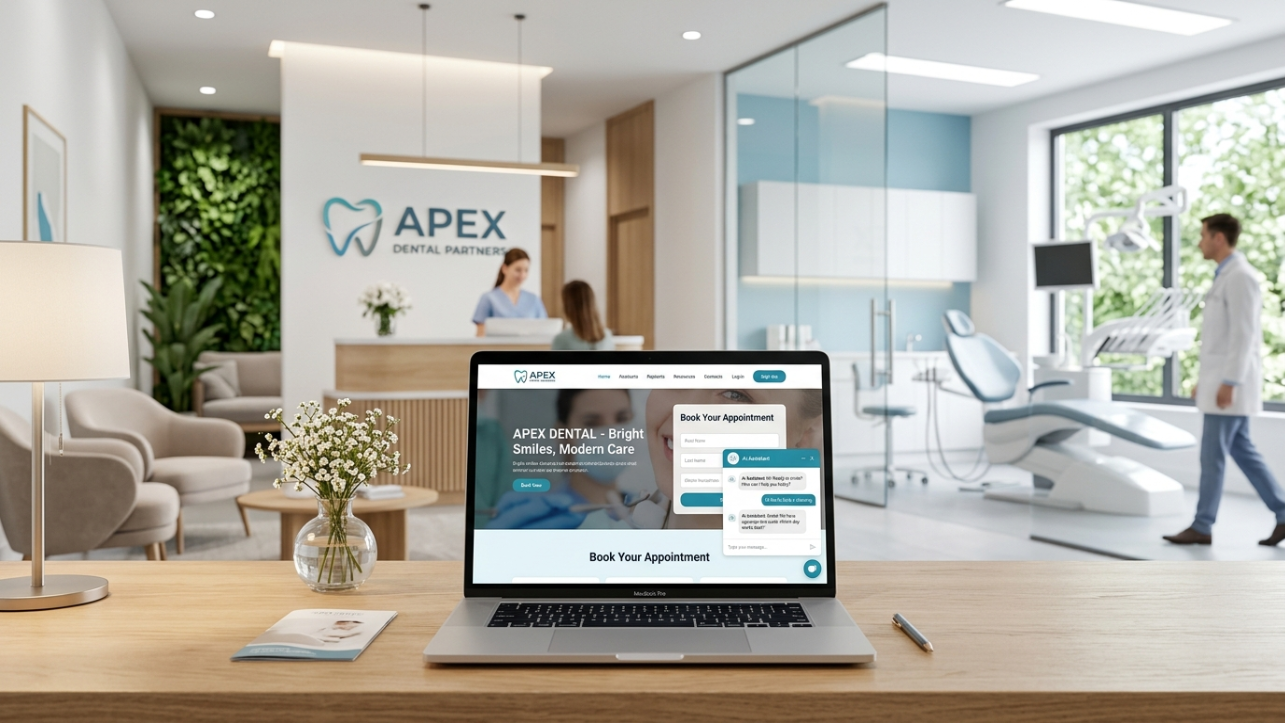
Dental clinic websites often lose potential patients before the first real contact happens. A visitor lands on the site, wants to ask about treatment, availability or costs, cannot find a clear answer fast enough, and leaves.
This does not always mean the person was not interested. In many cases, the visitor was ready to take the next step but needed a quick answer first.
A related guide worth reading is AI Chatbot for Beauty Salons.
An AI chatbot can help a dental clinic turn more website visitors into structured patient inquiries. Instead of forcing people to search through several pages or fill in a static form, the assistant can answer common questions, guide the conversation and collect the details the clinic needs for follow-up.
Why dental clinic websites lose inquiries
A dental clinic website usually gets visitors with practical intent. Most of them are not looking for entertainment or general information. They usually want one of these things:
- to ask whether the clinic is accepting new patients
- to request an appointment
- to ask about a treatment such as cleaning, implants, braces or whitening
- to find out opening hours
- to check location and contact details
- to ask about urgency or next available slots
- to understand how to start treatment
If the website does not make this easy, the visitor may leave and contact another clinic. This problem is even bigger on mobile, where people often want a fast answer without browsing many sections.
A chatbot reduces that friction by turning a passive website into a guided conversation.
For another example in this area, visit AI Chatbot for Lawyers.
What a dental clinic chatbot should answer
A useful dental chatbot does not need to replace the reception team or a dentist. Its job is to handle common first questions and help move the visitor toward a proper inquiry.
For example, it can answer questions like:
- What treatments do you offer?
- Are you accepting new patients?
- Do you have appointments available this week?
- What are your opening hours?
- Where is the clinic located?
- How can I request an appointment?
- Do you provide consultations?
- How can I contact the clinic?
The chatbot should be helpful, simple and reassuring. In healthcare-related niches, tone matters. A cold or confusing chatbot can hurt trust, while a calm and clear one can help the visitor continue.
What details the chatbot should collect
A dental clinic does not just need a vague message such as “I need help.” The team needs enough context to respond properly.
A useful chatbot can collect:
- patient name
- phone number
- treatment interest
- preferred appointment date
- preferred time
- short message
- optional urgency note
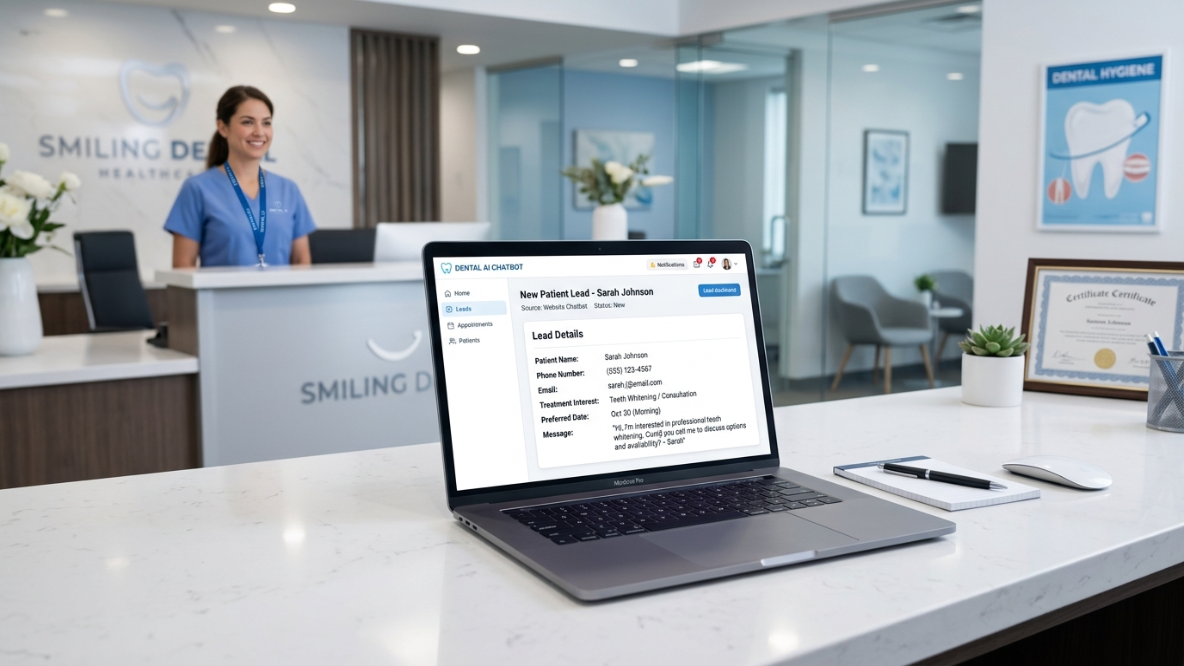
This makes the inquiry easier to handle. Instead of calling back without context, the clinic already knows what the patient is interested in and how to follow up.
Example conversation flow
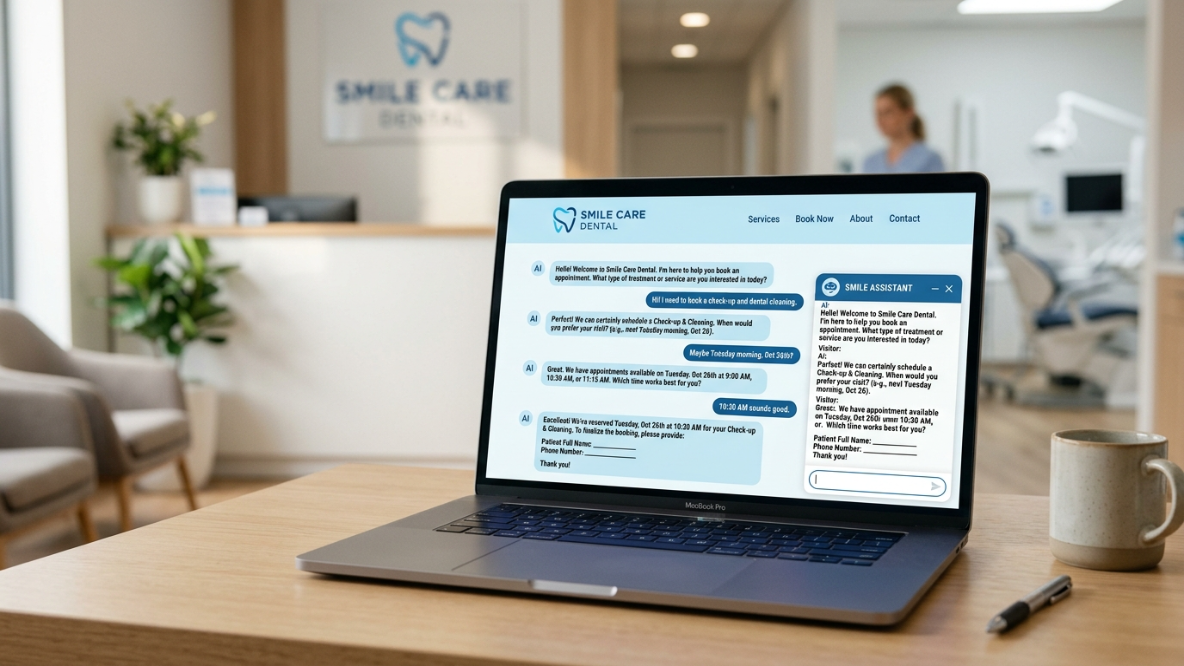
A simple dental chatbot flow may look like this:
- The visitor asks whether appointments are available.
- The assistant replies and asks what treatment or issue the patient is interested in.
- The visitor selects a treatment or describes the need.
- The assistant asks for the patient name and phone number.
- The assistant asks what day or time works best.
- The patient submits the details.
- The inquiry is sent to the clinic by email.
This flow is simple, but it removes friction. The visitor does not need to search for a phone number, wait on hold or fill in a generic form without guidance.

Why this improves patient inquiry generation
A contact form waits for the visitor to act alone. An AI chatbot creates a guided first interaction.
That matters because many people are not ready to call immediately. They may want to ask one practical question first, such as whether the clinic offers a treatment or whether an appointment is available soon.
A chatbot can improve inquiry generation by:
- answering common questions instantly
- reducing missed patient inquiries
- making the site easier to use on mobile
- helping the reception team receive more structured requests
- making the clinic appear more responsive
- collecting cleaner appointment details
For a broader explanation of this workflow, read How Website Chatbots Help Local Businesses Generate Leads.
What makes a dental clinic chatbot useful
A useful dental chatbot should be focused and trustworthy. It should not overwhelm the visitor or sound like it is trying to diagnose a condition.
A good flow usually asks only what is needed to create a useful inquiry, for example:
- What treatment are you interested in?
- What day or time works best for you?
- What is your name?
- What phone number should the clinic use?
- Would you like to leave a short message?
This creates a practical balance between helpfulness and simplicity.
Common mistakes to avoid
A dental clinic chatbot can hurt conversions if it feels confusing, robotic or unreliable.
Asking too many questions
If the first interaction feels longer than filling out a form, visitors may leave. Start with a short and practical flow.
Sounding like medical advice
A chatbot should not try to replace clinical judgment. It can provide general information and collect inquiries, but diagnosis and treatment advice should come from the clinic.
Giving unclear answers
If the chatbot is uncertain, it should say that the clinic team will follow up. It should not invent details.
Ignoring patient trust
Healthcare-related websites depend heavily on trust. The chatbot should feel professional, calm and helpful.
When a dental clinic should use a chatbot
A dental clinic should consider a chatbot if the website already receives visitors and the clinic regularly gets questions about treatments, appointments, hours or new patient inquiries.
It is especially useful when:
- the reception team cannot answer every inquiry immediately
- the clinic receives the same questions repeatedly
- the site has traffic but not enough inquiries
- the clinic wants cleaner appointment requests
- many visitors browse from mobile devices
A chatbot is not a replacement for the clinic team. It is a tool that helps the website capture more of the interest that already exists.
AI chatbot vs live chat for a dental clinic
Live chat can work well when a real staff member is available to reply quickly. The problem is that many clinics do not have someone ready to answer every website question in real time.
An AI assistant can handle the first step, answer common questions and collect inquiry details even when the team is busy.
For a deeper comparison, read AI Assistant vs Live Chat for Small Business Websites.
Recommended next step
If the goal is to answer patient questions, collect appointment requests and send structured inquiries by email, a website AI assistant can be a practical option for a dental clinic.
Before going to the official product website, read the internal overview first: What Is Selvanto?.
FAQ
What can an AI chatbot do for a dental clinic?
It can answer common patient questions, help with appointment requests, collect contact details and send structured inquiries to the clinic.
Can a dental chatbot collect appointment requests?
Yes. It can ask what treatment the patient is interested in, what day or time works best and how the clinic should contact them.
What information should a dental clinic chatbot collect?
A simple dental chatbot should collect the patient name, phone number, treatment interest, preferred appointment date and a short message.
Should a dental chatbot give medical advice?
No. It should provide general information and collect inquiries, but detailed medical advice should come from the dental clinic.
Can the chatbot send patient inquiries by email?
Yes. A website assistant can collect the key details and send the inquiry to the clinic by email.
Next step
If you want to see how this type of assistant can work on a real business website, start with the internal Selvanto guide first.
Read about Selvanto