AI Chatbot for Lawyers and Law Firms: How to Collect More Consultation Requests
A practical guide for lawyers and law firms that want to use an AI website assistant to answer visitor questions, collect consultation requests and turn website traffic into qualified leads.
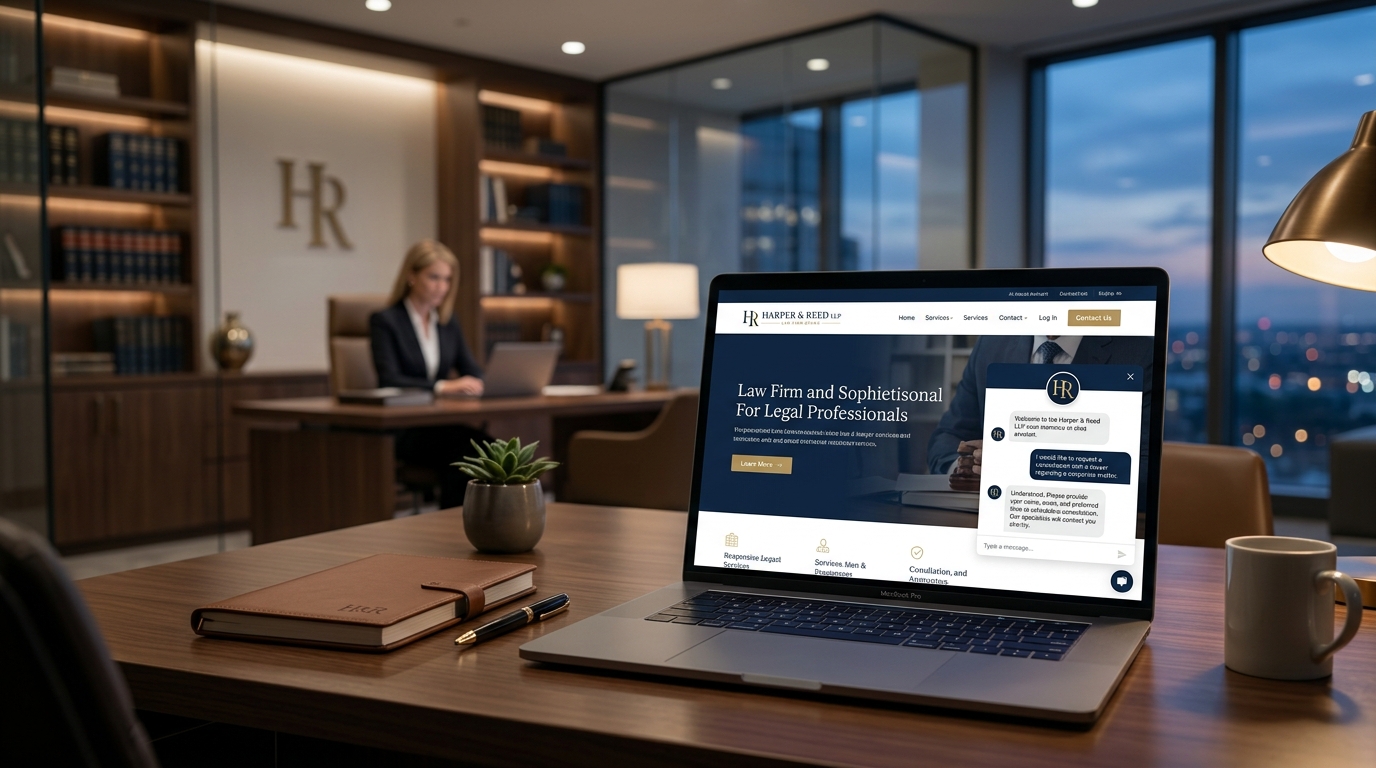
Law firm websites often receive visitors who already have a serious problem. A person may need help with a contract, family matter, immigration issue, business dispute, property question or another legal concern. The problem is that many visitors leave without contacting the firm because the first step feels unclear.
They may not be ready to call immediately. They may not know whether their issue fits the firm. They may want to ask one simple question before booking a consultation.
A good article to read next is AI Chatbot for Beauty Salons.
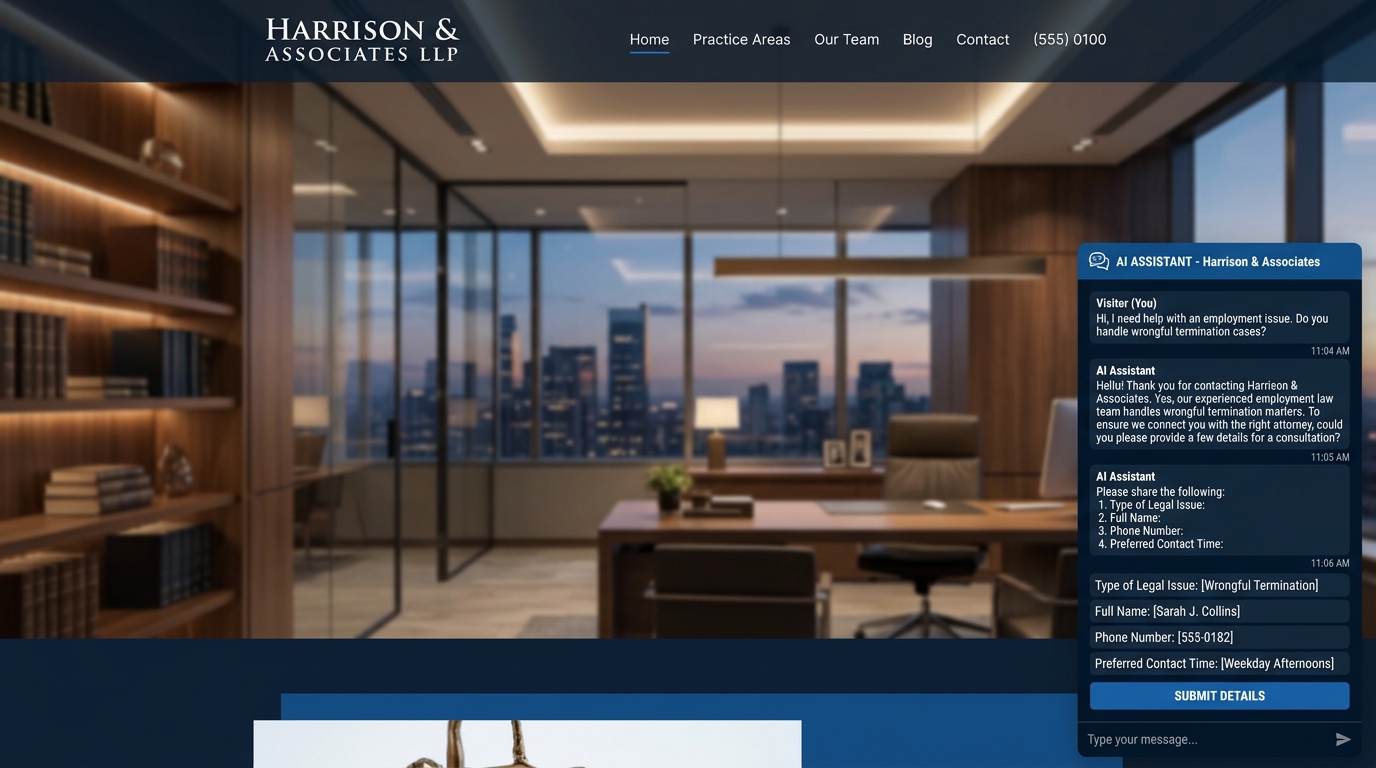
An AI chatbot can help a law firm turn more website visitors into structured consultation requests. Instead of making visitors search through multiple pages or fill in a cold form, the assistant can guide the first interaction, collect useful details and send the inquiry to the firm.
Why law firm websites lose leads
A law firm website usually attracts visitors with strong intent. These visitors are often not browsing casually. They may be looking for help with a specific issue and trying to understand whether the firm can assist them.
Common visitor goals include:
- asking whether the firm handles a certain type of case
- requesting a consultation
- explaining a legal issue briefly
- checking location or service area
- finding contact details
- asking about next steps
- deciding whether to call or leave a message
If the website does not give a clear path forward, the visitor may leave and contact another firm. This is especially true on mobile, where people often want a quick answer without reading long service pages.
A nearby topic is covered in AI Chatbot for Dental Clinics.
A chatbot helps reduce this friction by giving the visitor a simple first step.
What a law firm chatbot should answer
A law firm chatbot should not replace a lawyer. It should not give legal advice. Its job is to help with the first layer of communication.
For example, it can answer general questions such as:
- What types of legal matters does the firm handle?
- How can I request a consultation?
- What information should I provide?
- Where is the firm located?
- What are the working hours?
- Can I describe my issue online?
- How will the firm contact me?
- What is the next step after submitting a request?
The assistant should be clear, professional and careful. In legal topics, trust matters. A chatbot should never sound like it is making legal decisions for the visitor.
What details the chatbot should collect
A law firm does not need a vague message like “I need help.” The team needs enough information to understand the inquiry and decide how to follow up.
A useful law firm chatbot can collect:
- visitor name
- phone number or email
- type of legal issue
- short description of the situation
- preferred contact time
- location or jurisdiction if relevant
- urgency level if appropriate
This makes the inquiry easier to review. Instead of receiving an unclear message, the firm gets a structured lead with context.
Example consultation request flow
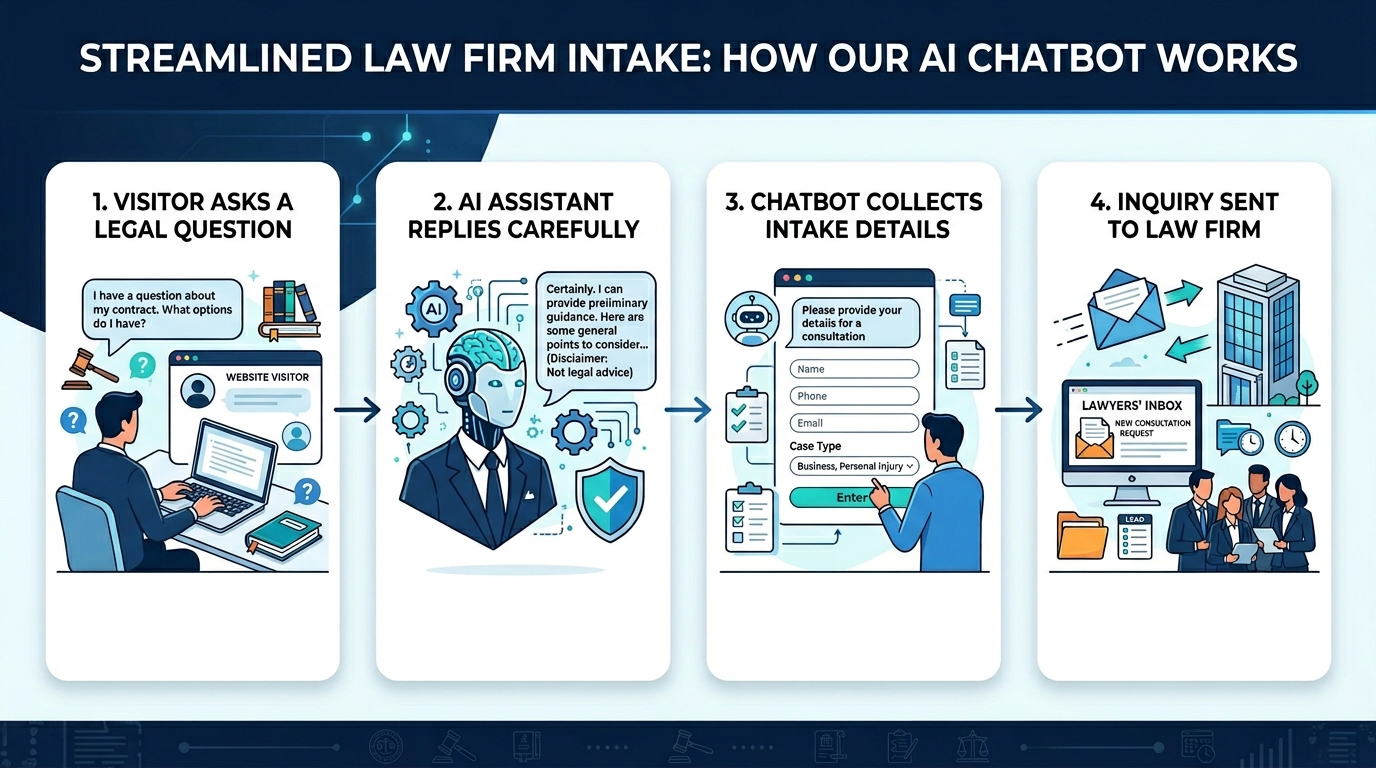
A simple chatbot flow for a law firm may look like this:
- The visitor asks whether the firm handles a certain type of issue.
- The assistant gives a general response and asks what help the visitor needs.
- The visitor chooses or describes the legal matter.
- The assistant asks for a short description.
- The assistant collects name and contact details.
- The assistant asks for a preferred contact time.
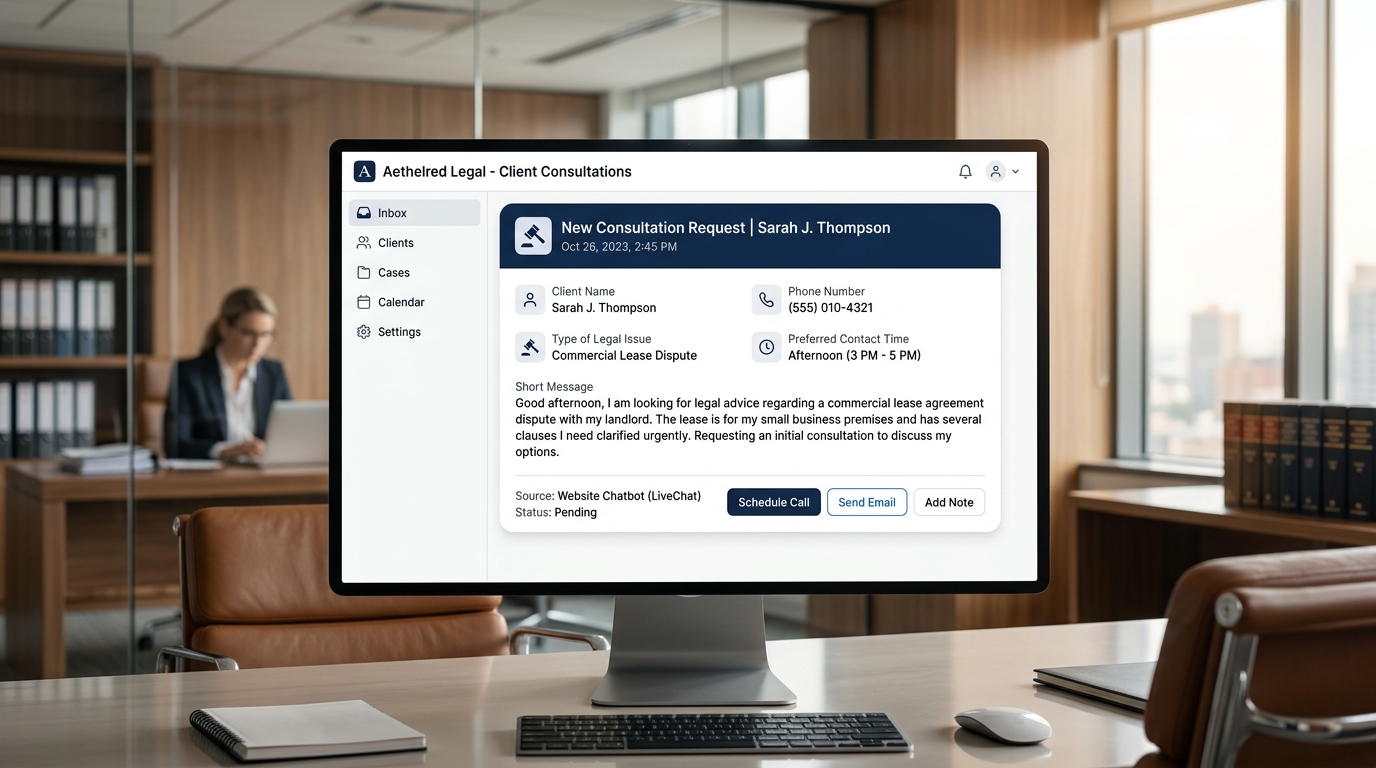
- The inquiry is sent to the law firm by email.
This does not replace a consultation. It simply organizes the first contact and makes follow-up easier.
Why this improves consultation lead generation
A traditional contact form waits for the visitor to take action alone. A chatbot creates a guided first interaction.
This can improve lead generation because the assistant can:
- answer basic questions instantly
- reduce uncertainty for visitors
- collect more complete consultation requests
- help mobile visitors take the next step
- make the website feel more responsive
- send structured inquiries to the law firm
For a broader explanation of this workflow, read How Website Chatbots Help Local Businesses Generate Leads.
What makes a legal chatbot useful
A useful legal chatbot must be careful and focused. It should help the visitor explain the issue without pretending to be a lawyer.
A good flow usually asks simple qualifying questions:
- What type of legal issue do you need help with?
- Can you briefly describe the situation?
- What is your name?
- What phone number or email should the firm use?
- When is a good time to contact you?
This gives the law firm enough context to decide how to respond.
Common mistakes to avoid
A chatbot on a law firm website can hurt trust if it is poorly designed. Legal visitors may already be stressed, so the assistant should feel professional and calm.
Giving legal advice
The chatbot should not diagnose the legal issue or tell the visitor what to do legally. It should collect information and direct the person to the firm.
Asking too many questions
If the chatbot feels like a long form, people may abandon it. Keep the first inquiry flow short.
Sounding too casual
A law firm chatbot should not sound like a toy. It should be polite, clear and professional.
Collecting too little context
If the assistant only collects a name and phone number, the firm may still not understand the inquiry. A short issue description is often useful.
When a law firm should use a chatbot
A law firm should consider a chatbot if the website receives visitors but too many leave without submitting a request.
It is especially useful when:
- the firm receives repeated basic questions
- visitors are unsure which service fits their issue
- the team misses inquiries outside working hours
- the website has traffic but low consultation requests
- the firm wants more structured leads
A chatbot is not a replacement for legal staff. It is a first-contact tool that helps the website capture more useful inquiries.
AI chatbot vs live chat for law firms
Live chat can work well when a real person is available. The problem is that many law firms cannot answer every website message instantly.
An AI assistant can handle the first step, ask basic questions and collect consultation details even when the team is busy.
For a deeper comparison, read AI Assistant vs Live Chat for Small Business Websites.
Recommended next step
If the goal is to answer initial visitor questions, collect consultation requests and send structured leads by email, a website AI assistant can be a practical option for a law firm.
Before going to the official product website, read the internal overview first: What Is Selvanto?.
FAQ
What can an AI chatbot do for a law firm?
It can answer basic website visitor questions, collect consultation requests, ask for contact details and send structured inquiries to the law firm.
Can a law firm chatbot collect consultation requests?
Yes. It can ask what type of legal issue the visitor has, collect contact details and send the inquiry to the firm.
Should a legal chatbot give legal advice?
No. A law firm chatbot should not provide legal advice. It should collect information and direct the visitor to the firm for a proper consultation.
What information should a law firm chatbot collect?
It can collect the visitor name, phone number or email, type of legal issue, preferred contact time and a short description.
Can the chatbot send leads by email?
Yes. A website assistant can collect the inquiry details and send them to the law firm by email.
Next step
If you want to see how this type of assistant can work on a real business website, start with the internal Selvanto guide first.
Read about Selvanto